 Rolf Obermaier
Fundamental Questions
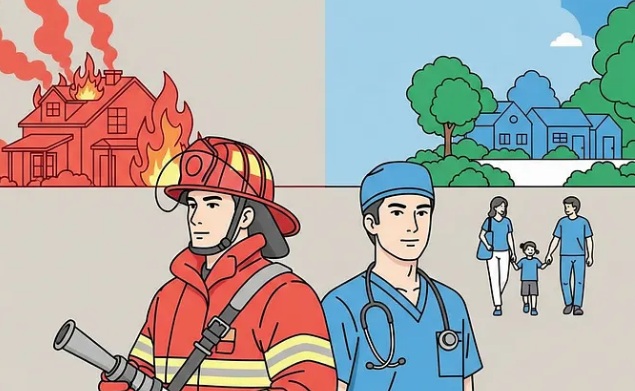
When your house catches fire, do firefighters check your insurance card before spraying water? When someone breaks into your home, do police demand payment upfront? Of course not. These are public services we fund collectively because we recognize that some services are too essential — and too vulnerable to market failure — to rely solely on private delivery.
So why do we accept a system where paramedics who save your life in an ambulance hand you a $3,000 bill, but the firefighters who saved your house send no bill at all?
This isn’t a philosophical question about big government versus small government. It’s about applying consistent free-market principles to achieve better outcomes through smarter policy — the same way the world’s freest market economies have done.
An American Confusion:
Mistaking Insurance for Healthcare
Americans have been sold a fundamental lie: that having health insurance equals having healthcare. This false equivalence has obscured a basic truth that every other developed nation understands — insurance is just a payment mechanism, not the service itself.
What We Actually Have
The United States doesn’t have a healthcare system — it has a healthcare industry designed around profit extraction. Consider the numbers:
- $13,432 per person annually (nearly twice the average of peer nations)
- 8% of spending goes to administration ($925 per person vs. $245 in peer countries)
- 8% of Americans remain uninsured, and 26.8% of those with insurance skip care due to costs
- 76.4 years life expectancy compared to 82.7 years in top free-market economies
Even the Affordable Care Act — celebrated as healthcare reform — primarily expanded access to insurance, not healthcare. High deductibles ($2,600 average), narrow networks, and administrative complexity mean that having an insurance card doesn’t guarantee access to care when you need it.
What Other Free Market Countries Have
The world’s most economically free nations — Singapore, Switzerland, New Zealand, Denmark, Sweden — all have universal healthcare systems that treat medical care as a public service while maintaining robust market economies. They achieve:
- Near-zero uninsured rates
- $6,405 average per capita spending (half of U.S. levels)
- Better health outcomes across virtually every metric
- 1–3% administrative costs due to unified systems
These aren’t socialist paradises, they’re market-oriented democracies that simply apply basic economic principles to healthcare.
The Market Failure Argument:
Why Healthcare Isn’t Like Buying Shoes
Free-market advocates understand market failures. Healthcare exhibits classic characteristics that make pure market solutions inadequate:
1. Information Asymmetry
When you’re having a heart attack, you can’t comparison shop. You can’t evaluate the qualifications of cardiac surgeons while unconscious in an ambulance. Unlike buying a car or choosing a restaurant, healthcare decisions are often made under duress with incomplete information.
2. Inelastic Demand
You need emergency surgery regardless of the price. You can’t postpone cancer treatment until costs come down. This breaks the normal supply-demand dynamics that make markets efficient.
3. Externalities
Your untreated tuberculosis affects my health. Unvaccinated children threaten community immunity. Healthcare decisions have spillover effects that individuals don’t internalize in their personal cost-benefit calculations.
4. Natural Monopolies
Rural hospitals often serve as natural monopolies — there’s not enough demand to support multiple competing emergency rooms in small towns. This leads to market concentration and price-setting power.
The Fire Department Test
Here’s a thought experiment that should resonate with anyone who values smart governance in a market-oriented society: Apply our current healthcare logic to fire departments.
Privatized Fire Protection (The Healthcare Model)
Imagine if fire protection worked like American healthcare:
- You’d need “fire insurance” through your employer
- Different insurers would contract with different fire companies
- You’d pay monthly premiums, plus a deductible before coverage kicks in
- Out-of-network fire departments might not respond to your house
- You’d receive separate bills from the fire truck company, ladder company, hose company, and each individual firefighter
- Administrative costs would consume 30% of the budget
- The uninsured would rely on “charity fire services” or go without protection
Does this sound efficient? Would this produce better fire protection? Would this reflect real economic freedom — or just the illusion of it?
Instead, this is the Public Fire Protection we have:
- Universal coverage funded through taxes
- Single coordinated response system
- No payment at point of service
- Predictable, controlled costs
- Focus on prevention and rapid response
- Minimal administrative overhead
This isn’t because Americans are secret socialists when it comes to fires. It’s because we recognize that fire protection has characteristics that make market provision inefficient and inequitable.
Learning from the World’s Freest Economies
The Heritage Foundation ranks Singapore as the world’s freest economy. Singapore’s healthcare system combines:
- Individual savings accounts (Medisave) for routine care
- Government subsidies for major medical expenses
- Price transparency and competition among providers
- Universal coverage with no one denied care
- $5,600 per capita spending with 84.6 years life expectancy
Switzerland — ranked #2 in economic freedom — mandates universal insurance but uses private insurers with strict regulation:
- All residents must have insurance (true universality)
- Income-based subsidies ensure affordability
- Price negotiations keep costs reasonable
- $9,688 per capita spending with 84.0 years life expectancy
These aren’t accidents. They’re the result of applying free-market principles intelligently — using market mechanisms where they work (competition among providers, price transparency, consumer choice) while addressing market failures through targeted government intervention.
The Economic Case
Universal healthcare isn’t just morally superior, it’s economically efficient:
Administrative Efficiency
- Current U.S. system: $925 per person in administrative costs
- Universal systems: $245 per person average
- Potential savings: $680 per person annually ($224 billion nationally)
Reduced Bankruptcy and Financial Stress
- 68% of U.S. bankruptcies involve medical bills
- Medical debt affects 100 million Americans
- Universal systems eliminate medical bankruptcy entirely
Increased Labor Market Efficiency
- Job lock: Americans stay in suboptimal jobs for health benefits
- Entrepreneurship penalty: Starting a business means losing employer coverage
- Universal systems allow true labor mobility and risk-taking
Preventive Care Investment
- Universal systems invest in prevention, reducing expensive emergency interventions
- Better chronic disease management saves money long-term
- Population health improvements boost economic productivity
Addressing Common Objections from Free-Market Thinkers
“But Government is Inefficient!”
True — and that alone isn’t a serious rebuttal. Bureaucracy, slow decision-making, and political interference are real problems. But inefficiency alone is not a strong enough argument against universal healthcare, for three reasons:
The comparison matters. The private U.S. healthcare system is also inefficient — in fact, often more so. Medicare operates with 2% administrative overhead, compared to 8% for private insurance, and the Veterans Affairs healthcare system outperforms most private providers on quality metrics.
Some inefficiency is the cost of safety and oversight. In healthcare, layers of review and regulation can slow processes, but they also prevent fraud, unsafe practices, and catastrophic errors.
Outcomes are what count. Internationally, government-run or regulated systems consistently deliver better health outcomes at lower cost than the U.S. model. Inefficiency is a flaw, but it doesn’t outweigh the advantages in access, cost control, and overall public health.
The real question isn’t “Is government inefficient?” — it’s “Which system delivers better results for the resources invested?” On that test, the U.S. ranks far below other wealthy, market-oriented nations that treat healthcare as a public service.
“But I Don’t Want to Pay for Other People’s Healthcare!”
You already do. Emergency rooms can’t legally turn away uninsured patients, so we all pay for their care through higher prices and taxes. Medical bankruptcies impose costs on creditors and communities. Preventable diseases spread and impose societal costs.
The question isn’t whether to pool risk — we already do. The real question is whether we do it transparently, efficiently, and in a way that benefits society as a whole (universal system) or inefficiently (current patchwork of insurance, emergency charity care, and cost-shifting).
“But Innovation Will Suffer!”
A common objection to universal healthcare is the fear that it will stifle medical innovation. Critics argue that government involvement would choke the profit motive, which they claim drives breakthroughs in drugs, devices, and treatments. This argument, however, crumbles under scrutiny and ignores both empirical evidence and the moral imperative of accessible care.
First, the notion that the U.S.’s market-driven system is the sole engine of medical innovation is a myth. The National Institutes of Health (NIH), funded by taxpayers, is the backbone of medical research, investing $45 billion annually (2023, NIH Budget). The NIH funds foundational research that pharmaceutical companies often build upon, with public dollars underwriting the risky, early-stage studies that lead to breakthroughs. In contrast, pharmaceutical companies spend more on marketing than on research and development — $56 billion on marketing vs. $43 billion on R&D in 2022 (PhRMA and GAO data). This undermines the claim that private industry’s profit motive is the primary driver of innovation.
Second, countries with universal healthcare systems prove that innovation thrives under regulated, equitable models. Switzerland, with universal coverage, is home to global pharmaceutical giants like Roche and Novartis, contributing to a biotech sector that rivals the U.S. Singapore, with its market-oriented universal system, fosters cutting-edge medical technology and maintains a life expectancy of 84.6 years. Germany, another universal healthcare leader, supports a robust pharmaceutical industry while spending half per capita on healthcare compared to the U.S. These nations show that universal systems don’t suppress innovation — they channel it into outcomes that benefit everyone, not just the wealthy.
More critically, innovation is meaningless if its benefits are inaccessible. What’s the value of a life-saving cancer drug if only the affluent can afford it? In the U.S., 26.8% of insured Americans skip care due to costs (Commonwealth Fund, 2022), meaning even groundbreaking treatments often remain out of reach. Universal systems ensure that innovations translate into real-world health gains, not just profits for a few.
For those who shrug and say, “That’s just how the world works — the wealthy earn their access, and I’m not responsible for others’ choices,” this argument diverges from reason and empathy. Healthcare isn’t a luxury good like a yacht; it’s a fundamental need that underpins human dignity and societal stability. As Dr. G.M. Gilbert, the psychologist who studied Nazi leaders at the Nuremberg trials, observed: “Evil, I think, is the absence of empathy — a genuine incapacity to feel with fellow men.” A system that leaves millions unable to access life-saving care isn’t just inefficient; it’s a moral failure. Universal healthcare aligns with both economic logic and human compassion, ensuring that innovation serves all, not just the privileged few.’
The Illusion of Free Market Medicine: Regulation as a Barrier to True Choice
A critical flaw in the argument for a “free market” in healthcare is the assumption that such a market could exist in the first place. Unlike consumer goods like shoes or electronics, healthcare is one of the most heavily regulated industries in the United States, and for good reason — patient safety, quality control, and public health depend on oversight. However, this regulation fundamentally undermines the notion of a free market, rendering the idea of “muh freedom” in healthcare an illusion. The reality is that patients have little to no autonomy in critical aspects of their care, and the system is structured to limit choice far more than it enables it.
Consider the following ways regulation shapes healthcare in ways that defy free-market principles:
Prescription and Treatment Restrictions: You cannot walk into a pharmacy and purchase antibiotics, insulin, or chemotherapy drugs based on your own judgment, even if you’re well-informed. The system requires a licensed physician to prescribe medications, dictating what you can buy, in what dosage, and when. This gatekeeping, while necessary to prevent misuse and ensure safety, eliminates the consumer sovereignty that defines free markets. You can’t choose your treatment the way you choose a car or a meal — you’re at the mercy of professional and regulatory oversight.
Licensing and Scope-of-Practice Laws: Healthcare providers, from doctors to nurses to pharmacists, must meet stringent licensing requirements. These rules, enforced by state and federal bodies, limit who can provide care and what services they can offer. For example, nurse practitioners in some states cannot practice independently due to scope-of-practice laws, reducing competition and patient options. While these regulations aim to maintain quality, they create barriers to entry that stifle the kind of open competition that supporters of economic freedom champion in other industries.
FDA and Drug Approvals: The Food and Drug Administration exercises tight control over which drugs and medical devices can enter the market. While this process may be critical for ensuring safety, it has also been widely criticized as a system vulnerable to regulatory capture, lobbying pressure, and corporate influence — with documented cases involving pharmaceutical giants and chemical manufacturers like DuPont’s C8 scandal. As a result, patients are often denied access to unapproved or experimental treatments, even if they are fully informed and willing to take the risk. In a truly free market, consumers could theoretically make those decisions themselves. In healthcare, that freedom simply doesn’t exist.
Insurance Cartels and Network Restrictions: The idea that you can freely choose your insurance company or doctor is largely a myth. Regional monopolies and cartels dominate the insurance market, limiting competition. Moreover, “in-network” restrictions mean that even with insurance, your choice of providers is constrained. Most Americans cannot simply pick any doctor or hospital — they’re funneled into narrow networks dictated by their insurer. This is not a market where consumer choice drives efficiency; it’s a rigged system where artificial constraints trap patients.
No Room for Alternative Providers: In a truly free market, you might choose a non-traditional provider — like a shaman, naturopath, or alternative healer — if that’s what you prefer. But healthcare regulations and insurance structures exclude such options. Insurers won’t cover your “shaman of preference,” and hospitals won’t let unlicensed practitioners treat you. This isn’t about dismissing alternative medicine; it’s about recognizing that the system doesn’t allow the kind of open competition that Laissez-faire advocates imagine when they advocate for “free market healthcare.”
These regulatory realities mean that healthcare will never resemble the free markets seen in other sectors. The argument for deregulating healthcare to achieve a free-market ideal ignores the fact that regulation is intrinsic to ensuring safe and effective care. Not because regulation is inherently ‘good,’ but because in medicine, the stakes are simply too high when human lives are on the line — and healthcare, at its core, is about helping people live longer, healthier lives. The blind fanaticism of ‘no exceptions’ ignores the overwhelming, irrefutable evidence that well-designed exceptions do work — and often outperform rigid ideology. Without it, you’d have rampant fraud, unsafe drugs, and unqualified practitioners — hardly a recipe for freedom or efficiency.
The current system, with its patchwork of heavy regulation and profit-driven insurance, creates the worst of both worlds: it restricts patient choice while failing to deliver the efficiency of universal systems in countries like Singapore or Switzerland.
This point strengthens the case for universal healthcare. Suppose a truly free market in medicine is impossible due to necessary regulation. In that case, the debate shifts from “markets vs. government” to “how do we design a system that works within these constraints?” Universal healthcare models, like those in other free-market economies, accept the reality of regulation and use it strategically to ensure access, control costs, and maintain quality. They don’t pretend to offer an unregulated utopia; they deliver practical freedom — freedom from medical bankruptcy, freedom to change jobs without losing coverage, and freedom to access care when you need it most. By contrast, the U.S. system’s illusion of choice — where you can “pick” your insurer or doctor within a tightly controlled, profit-driven framework — offers neither true freedom nor efficiency.
The Path Forward: Market-Based Universal Healthcare
Universal healthcare doesn’t require abandoning market principles. Several models combine universal coverage with market mechanisms:
Singapore Model
· Health savings accounts for routine care
· Government-funded insurance for major expenses
· Price transparency and provider competition
· Government hospitals compete with private hospitals
Swiss Model
· Insurance through private companies
· Controlled pricing and standardized benefits
· Income-based subsidies ensure affordability
· Consumer choice among competing insurers
German Model
· Employer/employee contributions to insurance funds
· Competing non-profit insurance companies
· Negotiated pricing with provider associations
· Universal coverage with income-based premiums
All three models maintain competition and choice while ensuring universal access and controlling costs.
Consistency in Principles
The principled Laissez-faire position isn’t about opposing government entirely; it’s about ensuring that government enhances freedom, prevents market failure, and operates efficiently where necessary.
We don’t abolish fire departments in favor of private fire insurance because we understand that fire protection exhibits characteristics (natural monopoly, externalities, emergency response needs) that make market provision inadequate. Healthcare exhibits the same characteristics.
The world’s freest economies have recognized this reality and designed healthcare systems that combine market efficiency with universal access. They spend half what we spend while achieving better results and maintaining economic freedom.
Americans deserve the same freedom from medical bankruptcy, job lock, and rationed care that citizens of other free countries enjoy. We deserve a healthcare system that works as well as our fire departments; universal, efficient, and focused on protecting everyone when they need it most.
The choice isn’t between freedom and government control. It’s between smart government and dumb government, between efficient markets and dysfunctional markets, between true healthcare security and the costly illusion we call health insurance.
When your house is on fire, you don’t want to argue with your insurer about whether this fire department is in-network. You want the firefighters to put out the fire.
When you’re having a heart attack, you shouldn’t have to worry about your deductible. You should get the care you need to live.
That’s not socialism. That’s freedom.
---
Rolf Obermaier is a writer, marketing strategist, and unapologetic defender of liberty.
In his debut nonfiction work, Open Systems, Closed Minds, he dissects how the very systems promising connection often deliver control. His novel Navarchus ventures into philosophical science fiction, exploring what we sacrifice when we push discovery to the furthest edges of time and identity.
Rolf writes to provoke reflection and challenge assumptions—whether on Medium, in print, or across genres. He champions evidence-based education as a pillar of freedom and believes that human dignity begins with three essentials: language, personal autonomy, and unflinching truth.